 Calm Healthy Horses
About Grass
Feeding the Flora in the Hind Gut
It is important to understand that when you are feeding the horse you are actually feeding the flora in the hind-gut.
Digestion starts in the stomach which is an extremely acidic environment. The purpose of the strong acid is to start the breakdown of the coarse, fibrous material the horse is supposed to be consuming.
Food then proceeds through the Small intestine where the carbohydrate
and protein content is processed. Carbohydrates are broken down into
simple sugars and protein is broken down into individual amino acids.
Sugars and amino acids are readily absorbed into the bloodstream from
here....
Overview
However the fibrous bulk of the food passes on through
the small intestine to the hind-gut which consists of the large
intestine and the huge ‘fermentation vat’ which is the caecum. The
volume of the hind-gut is substantial and is populated with the various
flora which ferment the fibre.
By-products of the fermentation
process are what are known as ‘volatile fatty acids’ which are the
horses' main source of energy. Other by-products are large quantities of
the various B-Vitamins (including biotin)< Vitamin K and HEAT. This
is why feeding hay during winter and cold snaps helps keep the horse
warm, it fuels an internal heater!
Hence a high fibre diet is
really the ‘cool’ diet you are after in order to have a safe,
pleasurable ride. Filling your horse up with lush grass or processed
grains/molasses and protein meals does nothing for the hind-gut flora.
Instead, due to rapid absorption through the wall of the small
intestine, a diet high in these feeds can result in high blood sugar and
a surge of not so desirable energy. Horses need to be in a lot of work
to utilize this energy in order not to develop metabolic syndrome and
obesity.
These problems are compounded when mineral balances
aren’t addressed. Adding salt to feeds is an excellent place to start as
without sufficient sodium in the diet, nutrients including sugars
cannot be transported across the cell membrane into the cells
What to do?
Young/spring grass is NOT high in fibre because the plant is still
working on it, producing sugars during sunshine hours which at night are
converted into structural carbohydrates which make the plant ‘stalky’
and fibrous, the trouble is we tend to keep grazing it before the grass
gets a nice high fibre content.
Hence the need to feed hay in
spring even though this can be tricky because given the choice between
hay or sweet young grass, we all know which the horse is going to
choose.
Getting more fibre into your horse’s diet…
- Plan ahead, save a paddock from summer or Autumn for grazing in the spring
- Have as long a rotation as possible and don’t graze right to the ground as it takes too long to recover because there is virtually no leaf area left for photosynthesis to take place
- Make a temporary yard if you don’t have an actual yard and lock the horse in there with hay while you muck out
- Empty his feed bucket onto the hay
- Don’t feed processed feeds unless you are doing a LOT of work
to use up this energy – instead, feed chaffs and beet containing their
Premium/Supreme Minerals and salt (You can add a handful of one of their
favourite feeds to make sure they eat their goodies)
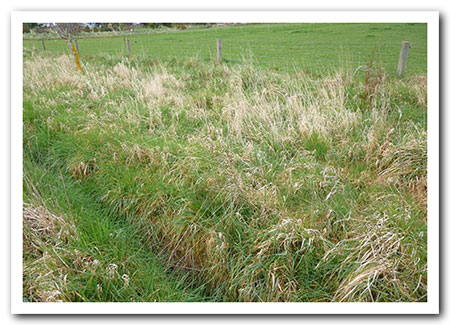
Lovely ‘Roadside grass’ long and fibrous – you can see how much fibre this would provide the horse compared to that in the grazed paddock in the background.